
Revolvers
Revolvers Australia | .357 Magnum, .44 Magnum & Double Action Revolvers | Buy Rrevolvers Online | .44 Magnum For Sale
The revolver remains a benchmark of mechanical reliability and a cornerstone in the evolution of firearms, with origins tracing back to the early 19th century. Its development transformed personal defense and field use by introducing a rotating cylinder capable of firing multiple rounds without constant manual reloading. This innovation established the revolver as one of the most dependable and enduring firearm designs in history.
The Evolution of Revolvers
Revolvers rose to prominence during the 1800s, becoming closely associated with frontier history and practical use in demanding environments. Early designs laid the foundation for modern revolvers, evolving from basic mechanisms into more efficient systems with the transition from black powder to smokeless powder and the adoption of self-contained cartridges. These advancements significantly improved performance, reliability, and ease of use.
Modern Revolver Design & Performance
Today’s revolvers combine classic engineering with modern innovation. Manufacturers have refined both single-action and double-action mechanisms, allowing for smoother operation and faster firing. Modern materials such as lightweight alloys and advanced polymers enhance durability, reduce recoil, and improve overall handling, making revolvers more practical for a variety of uses.
Key Advantages of Revolvers
H3: Reliability & Simplicity
Revolvers are widely recognised for their “point-and-shoot” simplicity and dependable operation. Their mechanical design allows them to function consistently, even in conditions where other systems may be more sensitive.
Powerful Calibre Options
Revolvers are capable of handling powerful calibres such as .357 Magnum and .44 Magnum, offering strong performance for different shooting applications.
Versatility & Practical Use
From target shooting to outdoor use, revolvers remain a versatile option, suitable for both experienced users and those seeking a straightforward, reliable platform.
The Modern Appeal of Revolvers
Despite the rise of semi-automatic designs, revolvers continue to hold a strong position due to their durability, ease of maintenance, and consistent performance. Modern advancements, including improved ergonomics and compatibility with contemporary accessories, demonstrate how the platform continues to evolve while maintaining its classic appeal.
Showing 1–12 of 241 results
-
-
-
-
-
-
-
-
 Revolvers
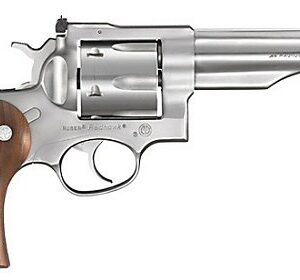
Ruger 5004 Redhawk DAA 44 RemMag 5.5″ 6rd Rosewood Grip Satin Stainless
$1,079.00 Add to cart -

-

-

-
